
The Architecture of Flow: The Nexus Bracelet

Introduction
I had previously shared the journey behind the Nexus dial work and architectural case design, touching on the inspirations, craftsmanship, and countless refinements that shaped them into what they are today. In continuation of that story, I felt it was equally important to speak about the bracelet itself, named Karumo. To me, the Nexus would never have felt truly complete without resolving this particular aspect. In many ways, the bracelet became the final piece that elevated not only the visual identity of the watch, but also the sense of fluidity and harmony when worn on the wrist.
The bracelet was never approached as an afterthought. In fact at Hitori, every detail carries equal weight and careful planning, not only across the dial and case architecture, but especially through every other parts of the watch that remain in either direct or indirect contact with the wearer throughout the day. Internally, the Nexus bracelet became one of the most challenging elements to refine, requiring repeated adjustments and reconsiderations in pursuit of a balance that felt natural on the wrist while remaining faithful to the architectural language of the Nexus itself.

More than simply matching the case visually, the bracelet needed to continue its rhythm, proportion, and sculptural flow. Every surface, transition, and link profile was carefully studied so the watch could move with softness rather than rigidity. The intention was never to create a bracelet that merely appeared integrated, but one that would disappear naturally into everyday wear while ameliorate by reinforcing the layered identity and restrained presence of the Nexus. As simple as it may appear at first glance, the development of the Karumo bracelet brought forth challenges that, in many ways, stood nearly on par with the construction of the Nexus two piece case itself.
Inspired by Movement and Armor
The Karumo bracelet traces its origins far earlier than the inception of the Nexus series itself. While much of the Nexus case and dial language came from my repeated visits to Yanagawa, a place I often return to both intentionally and instinctively, the bracelet followed a longer and more gradual path of thought. Yanagawa has always been somewhere I visit with my family to slow down, to sit quietly within its stillness and allow the surroundings to shape my perspective naturally. The softness of the canals and the calm rhythm of the town would later influence the silhouette of the case and dial. But the bracelet was different. Its ideas lingered through various chapters over the years, from the production period of the Yoshino, to quiet walks around the Meguro river, before finally finding clarity when the opportunity to create the Nexus emerged.
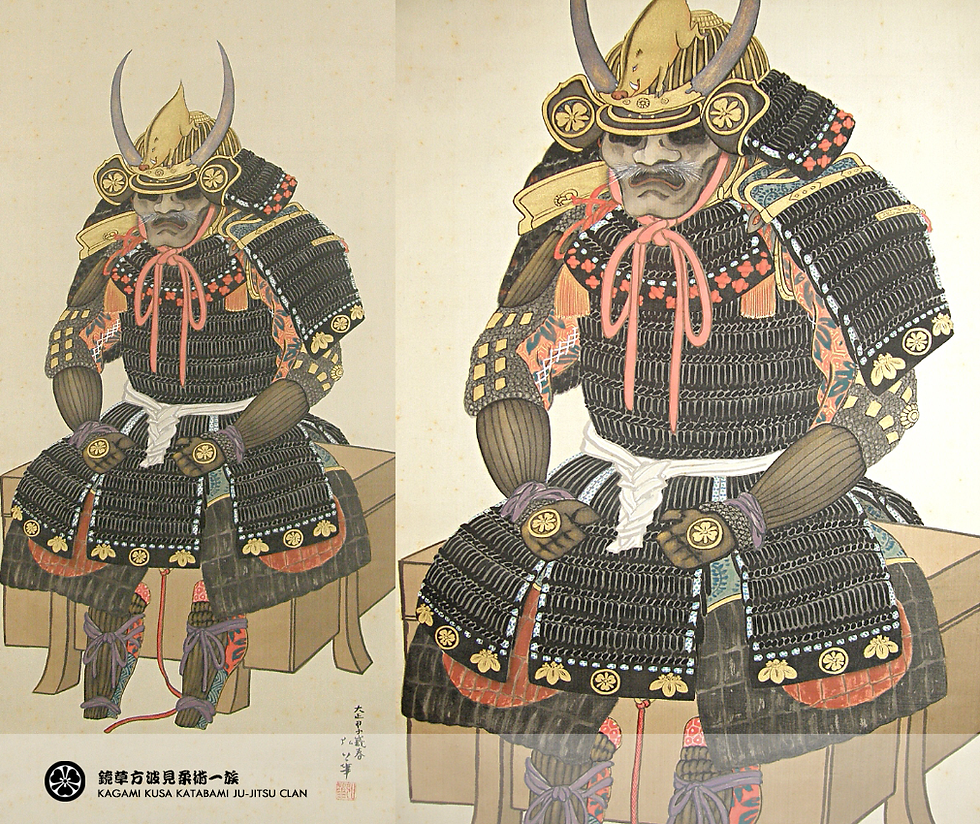
An early traditional Japanese armour (source: kunin-jj.org)
From the very beginning, I knew I wanted the bracelet to carry a balance between Japanese tradition and the kind of restrained elegance I have always admired personally as a collector. Throughout my years collecting watches, I often found myself drawn toward the beguiling bracelets fitted on certain F.P. Journe Octa models. There was something deeply refined about the way those tiny links intertwined with one another, flowing seamlessly from the lugs through the bracelet and toward the compact clasp beneath the wrist. The slanted edges, the fluid drape, and the mirror polished finishing gave the bracelet a sense of quiet sophistication that never felt excessive. Although I never owned one of these Octa bracelets myself, I always knew that its philosophy of proportion and fluidity would remain somewhere in my mind as a foundation for what a future Hitori bracelet could become.

A sixteenth centur Do-Maru armour with the "tiles-like" structure (source: metmuseum)
As the Nexus gradually began taking shape in my thoughts, the inspiration for the bracelet finally became clear and connected itself naturally. I did not want to merely reinterpret a typical Swiss bracelet design. Instead, I wanted to redefine something that reflected my deeper appreciation and understanding of Japanese culture and history. During my travels through Japan, especially while visiting heritage castles and museums, I often found myself captivated by the armor worn by samurai and military warriors of earlier periods. Among them, the Karuta gote left a particularly lasting impression on me. These armored sleeves, formed from small tile like plates connected together, carried a remarkable tension between strength and flexibility. That image remained quietly ingrained in my memory for years. When the time came to develop the Nexus bracelet, everything suddenly aligned. It became the moment to connect these inspirations together and begin working closely with the bracelet makers at Hitori.
As discussions progressed, one important consideration constantly remained in my mind. I wanted the bracelet to harmonize naturally with the hollowed lug architecture of the Nexus modular case. Then I recalled certain vintage Grand Seiko references and older Swiss watches that featured subtle negative space around the end link sections. That small detail immediately resonated with what we were trying to achieve. From there, the direction became clear. We set out to develop a bracelet with hollowed end link sections where the bracelet meets the watch head, allowing light and shadow to pass naturally through the structure while visually reinforcing the layered architectural identity of the Nexus itself.
Engineering Softness

Now, perhaps a small confession, or maybe just a relief to finally speak honestly about it: developing the Karumo bracelet was far more difficult than I initially imagined. From the outside, bracelets often look straightforward. A series of links joined together, tapering toward a clasp. But once we began seriously working on it, I realised how unforgiving every tiny detail could become.
From the start, we wanted the links to remain slim and delicate, almost tile-like in appearance, while still using screwed links for sizing instead of the traditional pin and collar systems often found on Japanese bracelets. It sounded simple enough at first, but balancing visual lightness with durability and comfort quickly became one of the greatest technical hurdles of the Nexus project. The bracelet needed to drape naturally around different wrist sizes without feeling stiff or mechanical, yet still retain enough structural integrity to feel reassuring during wear. Even at the early stages, it was already pushing our bracelet makers beyond what they were accustomed to producing.

At the same time, we were also trying to solve the clasp construction and the hollow end link architecture. The end links, in particular, became unexpectedly complex because they had to integrate precisely with the modular hollow lug design of the Nexus case. Every spring bar position, every angle, every tiny gap needed to feel precise and intentional once assembled together.
Our first prototype actually looked promising on paper. The spacing felt balanced and the proportions seemed correct. But once we mounted the bracelet onto the case, we immediately discovered the quick release spring bar tabs were making contact against the inner surfaces of the lugs. Small detail perhaps, but enough to completely disrupt the refinement we were chasing. We stopped everything and returned to the drawing board again, refining the geometry so the end links could sit more naturally against the case while preserving the fluidity we envisioned.

Once the articulation and end link structure were finally moving in the right direction, our focus shifted toward the clasp itself. Initially, I considered using a more conventional sports clasp similar to the ones we designed previously for the Meguro collection. Yet every time I looked at it, something felt disconnected. It lacked the softness and understated elegance the bracelet was slowly beginning to develop.
Eventually my thoughts returned to vintage Grand and King Seiko bracelets. I always admired how their clasps appeared almost seamless when closed, blending quietly into the bracelet rather than demanding attention with unnecessary flamboyance. There was a calmness to those designs that stayed with me for years. Still, I felt many of the vintage executions were slightly too long, so together with the bracelet makers, we kept refining the proportions repeatedly, shortening the clasp while preserving enough adjustment range for proper sizing through the smaller screwed links.

The clasp itself eventually went through two complete rounds of prototyping. Every detail was reconsidered, from the opening action to the embossed “ひとり” logo pressed onto the clasp cover. Around the same time, our revised end links also arrived, almost ten months after the second major prototype phase had started. I still remember the feeling of seeing the polished bracelet finally paired against the modular Nexus lugs properly for the first time. Quiet relief more than excitement. After months of adjustments, the bracelet no longer felt like something attached onto the Nexus. It finally felt like it belonged there.
Ironically, one of the solutions we ended up relying on was also one of the simplest. Instead of over engineering the attachment system, we returned to a more traditional spring bar construction. Primitive perhaps, but ultimately the most reliable solution for achieving the exact tolerances and fit we needed between the bracelet and the hollow lug case. Sometimes simplicity wins not because it is easier, but because it simply works best.
As development progressed further, we also became increasingly focused on creating a more uninterrupted flow between bracelet and case. Rather than designing conventional end links with visible terminal bars, we wanted the bracelet to feel almost endless visually, as though the links continued naturally from the watch head itself. That continuity became an important part of the Nexus identity.

The final stage was really about balance. One concern stayed in my mind throughout the entire process: I never wanted the bracelet to feel too thin or visually fragile against the sculptural presence of the Nexus case. The proportions needed harmony. Not a heavy architectural watch paired against something overly delicate beneath it. So we kept adjusting the thickness, link sizing, finishing, and transitions until everything finally settled into place.
Looking back now, Karumo became more than simply a bracelet project. It became a study of softness within structure. Of restraint within complexity. The final result carries traces of vintage elegance, Japanese sensibility, and modern architectural thinking all at once, yet hopefully without shouting any of it too loudly. And perhaps that balance is exactly what Hitori has always been searching for from the very beginning.
Fluidity on the Wrist - Where Structure Disappears

The entire process eventually stretched beyond a year, long and at times exhausting, yet absolutely worthwhile in hindsight. While we were satisfied with the final execution, we knew the work was still not truly complete until the bracelet had been thoroughly tested together with the actual Nexus case in daily wear. To us, this stage was equally important as the engineering and finishing themselves. It was never enough for the bracelet to simply follow the visual language of the case. It also needed to carry the same sense of fluidity when wrapping naturally around the wrist.
Perhaps it is a personal pet peeve of mine, but over the years I have encountered many bracelets that felt disconnected from the watches they were attached to. Some appeared as though they belonged to an entirely different genre altogether, while others became awkward and disproportionate once worn, especially on slimmer wrists like my own. No matter how beautiful a bracelet may appear in isolation, the illusion quickly fades when the wearing experience feels rigid or unresolved.

Because of this, we spent an extensive amount of time testing how the Karumo bracelet behaved once paired directly with the Nexus case. The articulation of each link, the taper, the clasp proportions, and even the way the bracelet draped beneath the wrist were repeatedly studied and adjusted. Our intention was for the bracelet to disappear naturally into wear, allowing the Nexus to feel balanced and cohesive from every angle, not only visually, but physically as part of everyday life.
With the final bracelet and watch case assembled together, we began wearing the Nexus extensively as a complete piece. It was only through daily wear that another issue quietly revealed itself. After some time on the wrist, I realised the end link section still felt slightly too pointed in its transition. As the bracelet curved naturally around my wrist, the end links would flare outward just a little too much from the lugs, disrupting the fluid silhouette we had worked so hard to achieve.
It was a subtle detail, one that many might never consciously notice, yet once seen, it could no longer be ignored. We immediately revisited the construction once again, refining the geometry of the end links so they would sit more naturally against the case without protruding during wear. The process required another week and a half of adjustments and re fabrication before the revised components finally arrived.

Once completed, I wore the watch again immediately. This time, everything finally settled into place. The transition between case and bracelet felt seamless, while the links wrapped fluidly around the wrist with the softness and balance we had envisioned from the very beginning. It was one of those quiet moments of satisfaction where the bracelet no longer felt like an attachment to the Nexus, but a natural continuation of the watch itself.
Finally, we spent time testing the adjustment system of each individual link together with the extension range offered through the slim clasp itself, ensuring the bracelet could achieve a comfortable and precise fit across different wrist sizes for Hitori collectors. These were details that could never be fully understood through drawings or measurements alone. They needed to be experienced through actual wear, repeated adjustments, and everyday use.
Only through these real world tests were we able to refine the final balance between comfort, proportion, and practicality. By the end of the process, both the team and I felt deeply satisfied with the final amendments and execution. The bracelet no longer felt like a separate component designed around the Nexus, but something that belonged to it naturally from the very beginning.
Concluding Thoughts

Looking back, the Karumo bracelet became far more than a supporting accoutrement to the Nexus. In many ways, it evolved into its own independent study of proportion, movement, and restraint. What began as an idea inspired by armor, vintage watchmaking, and Japanese architectural thinking slowly transformed into something deeply tied to the identity of the Nexus itself. Through every refinement, challenge, and adjustment, we realised that the bracelet was not simply there to accompany the watch, but to complete the emotional and physical experience of wearing it.
At Hitori, we have always believed that true refinement often lies within the details that are least spoken about. A bracelet may appear secondary at first glance, yet it remains the part of the watch that lives most closely with the wearer throughout the day. The way it wraps around the wrist, catches light across its surfaces, disappears beneath a sleeve, or settles naturally over time all contribute quietly to the relationship one builds with a watch. With Karumo, our intention was never to create something loud or overly complex, but rather something that feels instinctively right each time the Nexus is worn.
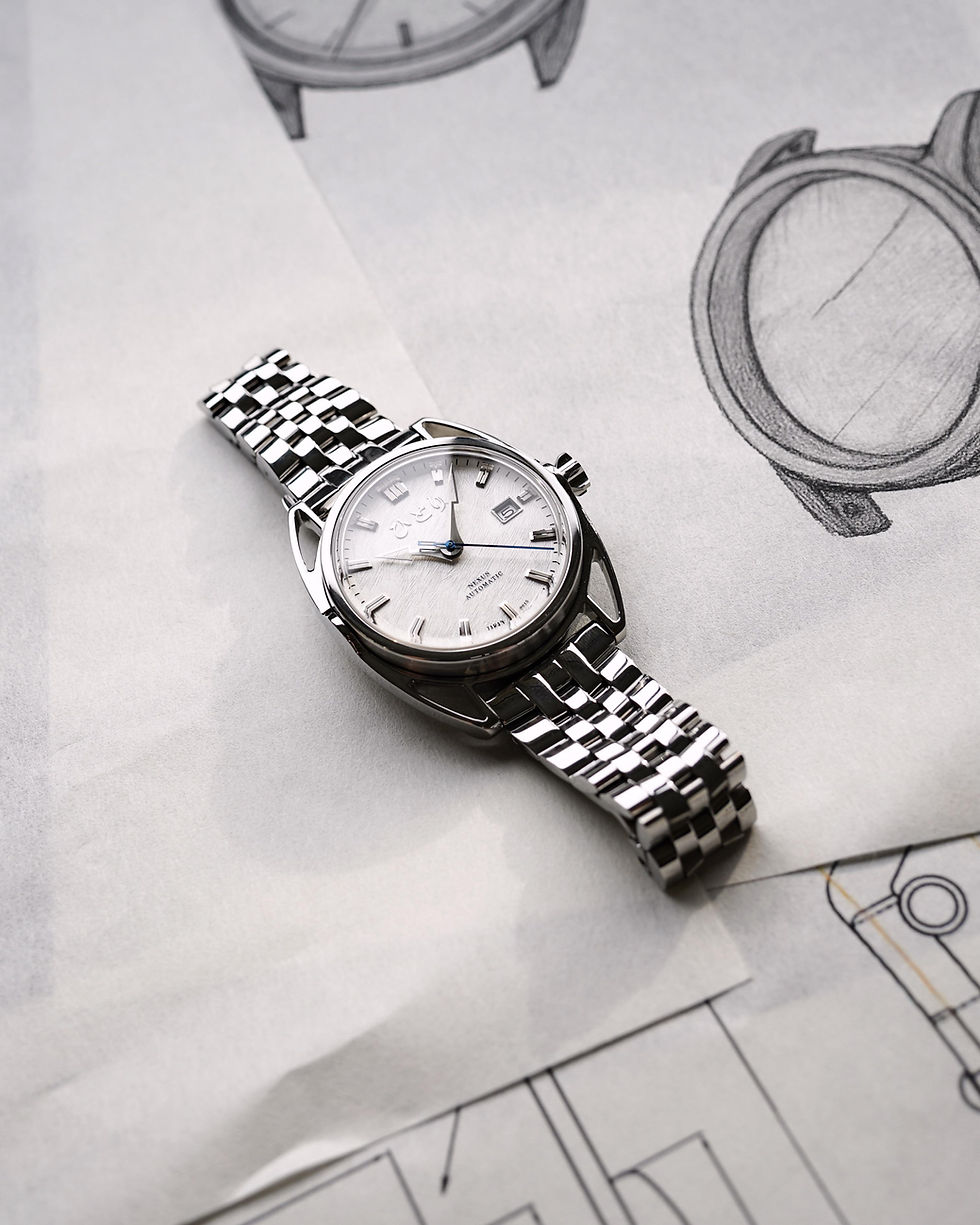
Perhaps that is ultimately what the Karumo bracelet represents to us. A balance between architecture and softness. Between structure and fluidity. Between modern form and traditional sensibility. It carries influences from the watches I admired as a collector, the places I wandered through not only in Japan but my whole watch journey, and the countless hours spent refining even the smallest unseen details together with the team. More than anything, I hope the bracelet allows the Nexus to feel whole on the wrist, not simply as an object of design, but as something calm, enduring, and quietly personal to live with over time.
—
Craft Dialogues, No. 05


Comments