
Ginga Tūrubi Collection, The Collector’s Preview

Last Friday evening, we gathered with a small group of Hitori friends at Sushi Dorobō in Bugis for something we had never really done before.
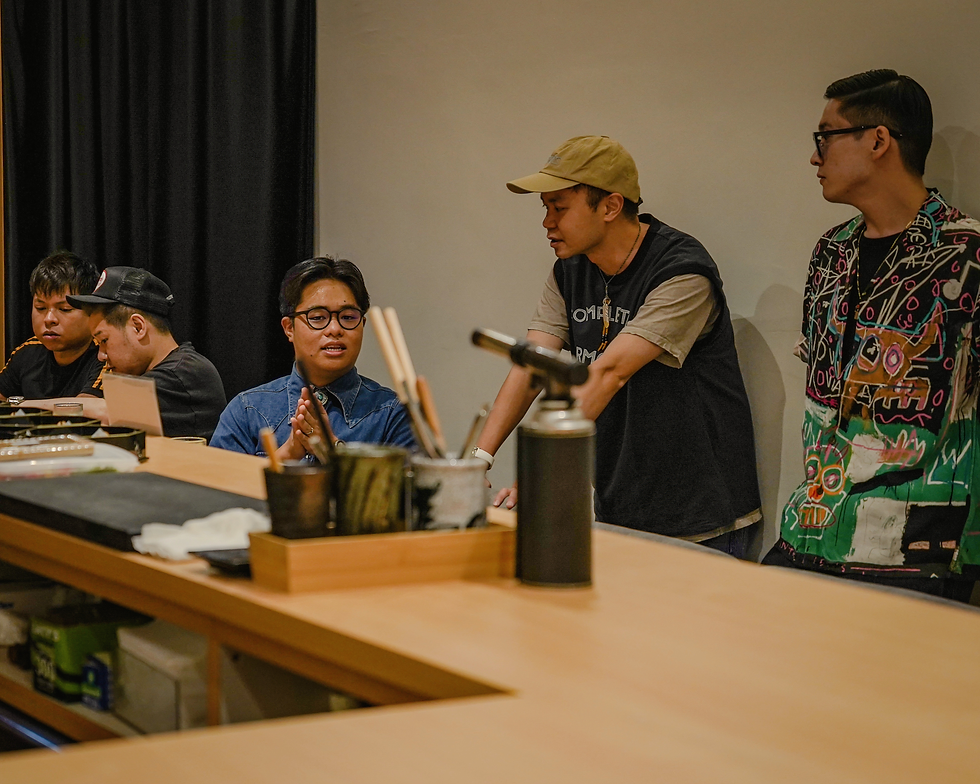
There were only ten guests around the table. Some had been following Hitori for quite some time, while others had only recently found us. The idea was deliberately simple. A quiet omakase dinner, some watches on the table, and the opportunity to share Ginga Tūrubi properly before its release. No large presentation or formal programme. Just an evening spent eating, talking about watches and finally putting something we had worked on for the better part of two years into the hands of the people we made it for.
Perhaps that was what made the evening feel particularly special to us.

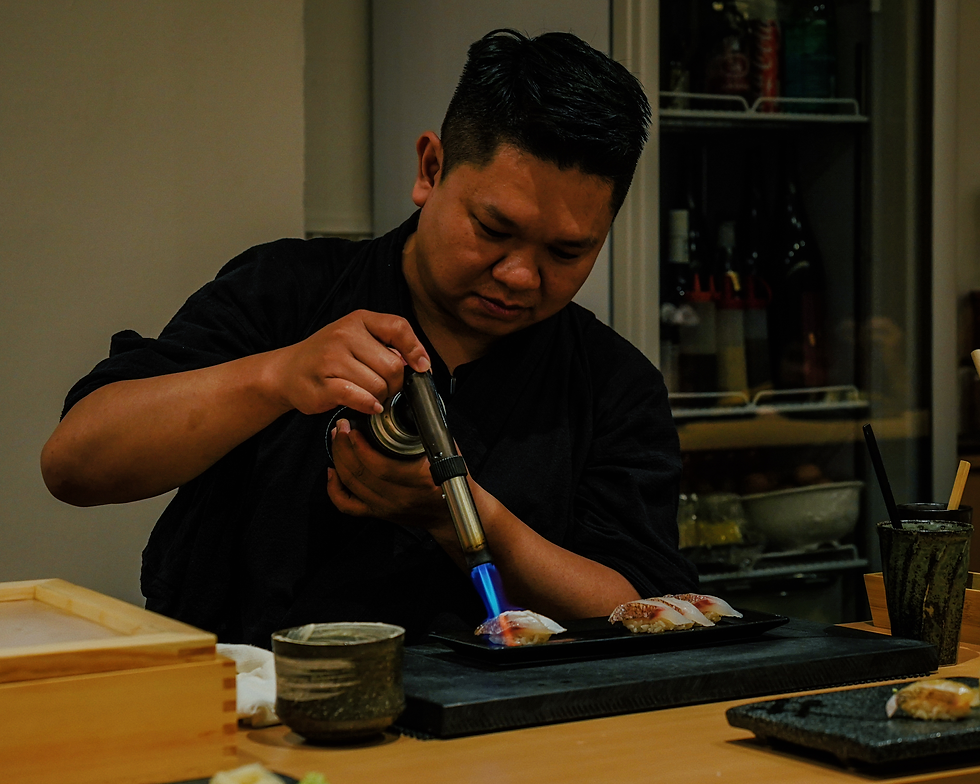
Inside the small sushiya, tucked away from the busy streets of North Bridge Road, the pace of the dinner seemed to suit the watches rather naturally. Each course arrived slowly from behind the counter, leaving plenty of time between them for conversations to wander. Watches came off wrists and moved around the table. There were familiar Hitori pieces from past collections, some already carrying the small marks of being worn regularly, sitting alongside the two Ginga Tūrubi watches for the first time.
Not everyone knew one another when the evening began. By the middle of dinner, however, it hardly seemed to matter.
There is something rather nice about watches in this way. A person might arrive knowing nobody in the room, yet a watch placed on the table can somehow begin an entire conversation. Soon there were discussions about movements, old Japanese watches, dial colours, collecting and all the strange little details that probably mean very little to anyone outside this hobby. Somewhere between the sushi and those conversations, what began as a preview started to feel more like a small reunion.

And this was also the first time we could properly observe Ginga Tūrubi away from our own desks and before the launch.
Until then, much of the relationship with the watch had been through drawings, prototypes, measurements and countless small decisions. Seeing Seiryō and Murasame moving from wrist to wrist was quite different. Some spent time watching the tourbillon rotate. Others immediately noticed the bracelet or the proportions of the case. A few simply wore the watch for a while and continued with dinner.
That last reaction was perhaps the most interesting.
Because beneath everything surrounding Ginga Tūrubi, there has always been a fairly simple question. What happens when something historically associated with prestige and extravagance is treated as an everyday watch?
Rather than trying to create the most elaborate Hitori possible, Tūrubi became an exercise in seeing whether a complication more than two centuries old could adapt to the kind of watches we have always enjoyed making. Something compact and automatic. Something comfortable enough to disappear on the wrist. Something that could still accompany its wearer through fairly ordinary days.
This thinking shaped much of the watch.

The 39mm case takes some of its character from the strong geometric forms found in Japanese watches of the 1970s, before flowing directly into the Kasane Yoroi bracelet. Its overlapping construction recalls the layered plates of traditional Japanese armour, giving the watch a slightly more architectural silhouette without making it feel overly ornamental.
Automatic winding and 100 metres of water resistance might sound like rather ordinary specifications beside a flying tourbillon, but perhaps that is precisely why they mattered. The tourbillon timepiece was never intended to ask its wearer to behave differently simply because there was something more complicated turning inside it.
At six o’clock sits the flying tourbillon of the Hitori Calibre HT01.
Its beginnings are rather familiar. The architecture started from the Japanese Miyota 8215, but little remained untouched as the movement developed. A new mainplate was created, the fourth wheel relocated and the escapement reworked, while the frequency was raised from 21,600 to 28,800 vibrations per hour. The result became something considerably removed from where the project began.
Yet the movement was never meant to become the entire identity of Ginga Tūrubi.

The tourbillon simply turns at six o’clock, completing its rotation once every minute. Sometimes it catches the eye. Sometimes it is forgotten altogether while the watch simply does what a watch is supposed to do.
There are two expressions of Ginga Tūrubi. Seiryō carries a cooler blue tone with a quieter, more restrained character, while Murasame moves towards lilac and changes considerably depending on the light around it. Both are surrounded by the small details that bring the watch back into the Hitori world: the star shaped markers, Art Deco numerals and Sashi Yari hands.
Perhaps the easiest way to describe the whole project is still the one we kept returning to throughout its development.
An everyday tourbillon.

Not something made to spend most of its life inside a safe, waiting patiently for an appropriate occasion. Rather, something to take to work, to travel with, to wear over dinner and eventually to scratch. Something that becomes less precious in the best possible way as it slowly becomes part of someone’s life.
Last Friday gave us the first small glimpse of that.
Before wandering through the photographs from the evening, the people who joined us and some of the watches that found their way onto the table, there is a much longer story behind why Ginga Tūrubi came to exist in the first place.
For those curious about the thoughts, questions and engineering that shaped the project, our earlier journal, An Exercise in Motion, goes much deeper into the “why” and “how” behind Ginga Tūrubi:
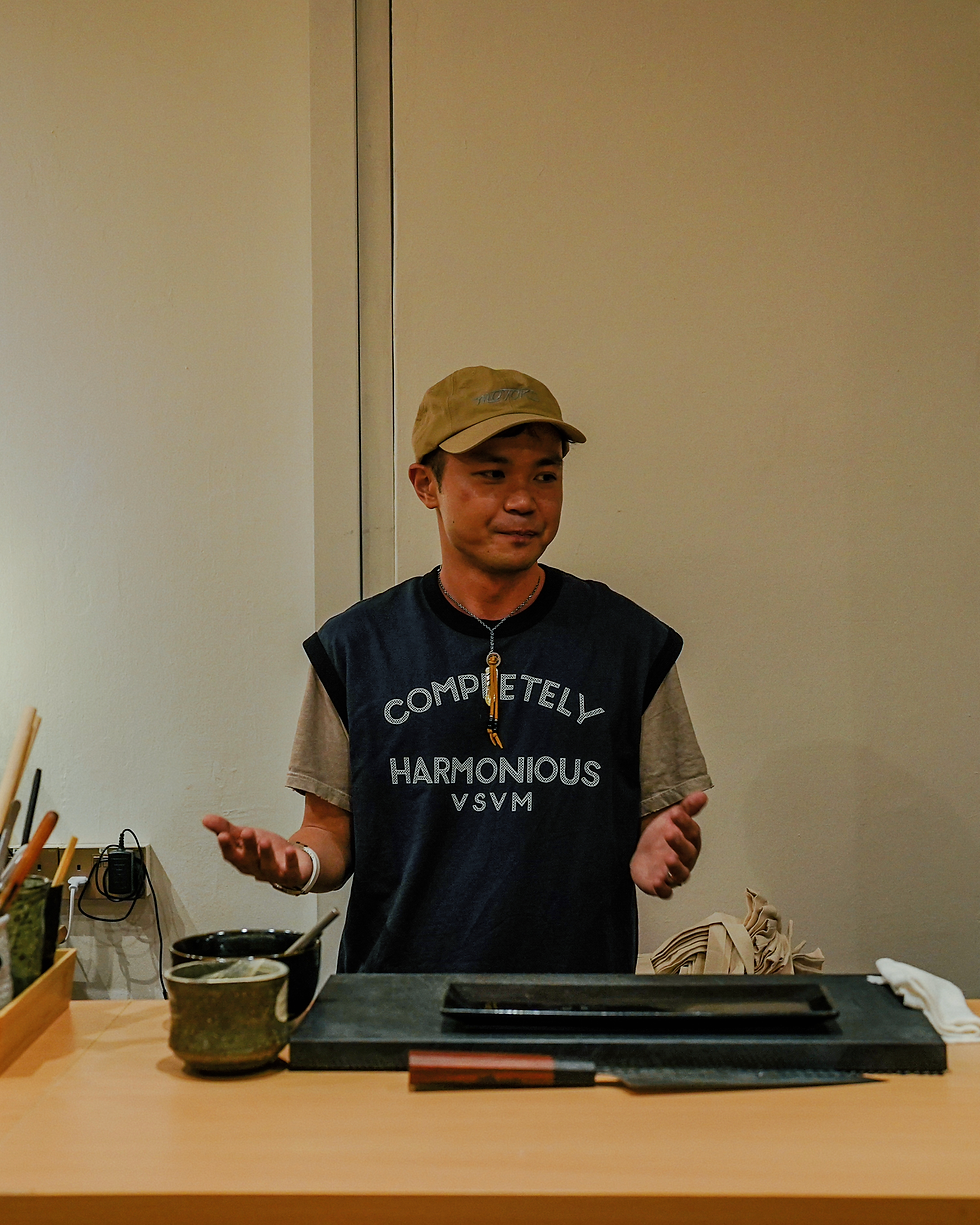
For now, these are simply some moments from a Friday evening in Bugis, shared over sushi, watches and ten friends of Hitori.
Hopefully, the first of many.








Comments